(Includes: tube-style liquid level sight glass installation, tube-style liquid level sight glass maintenance)
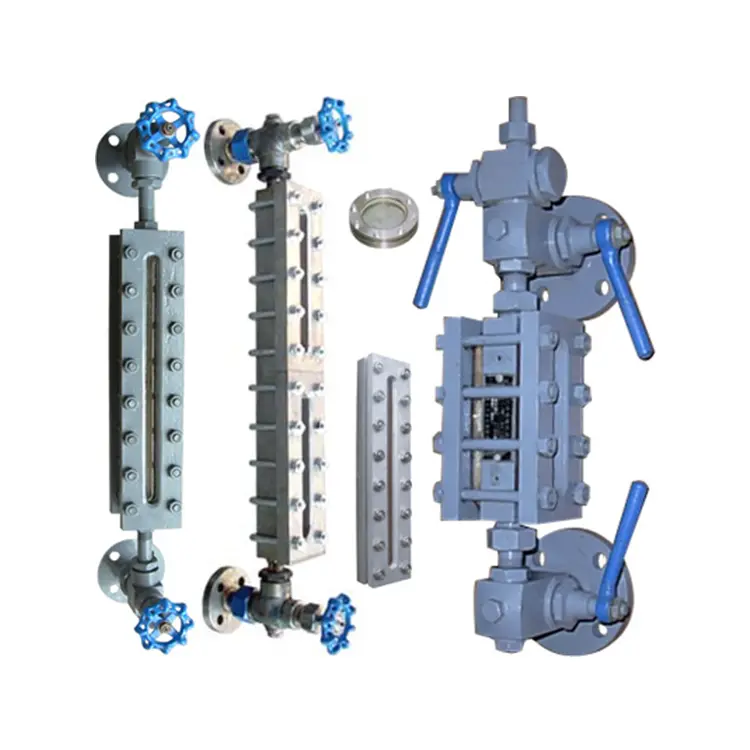
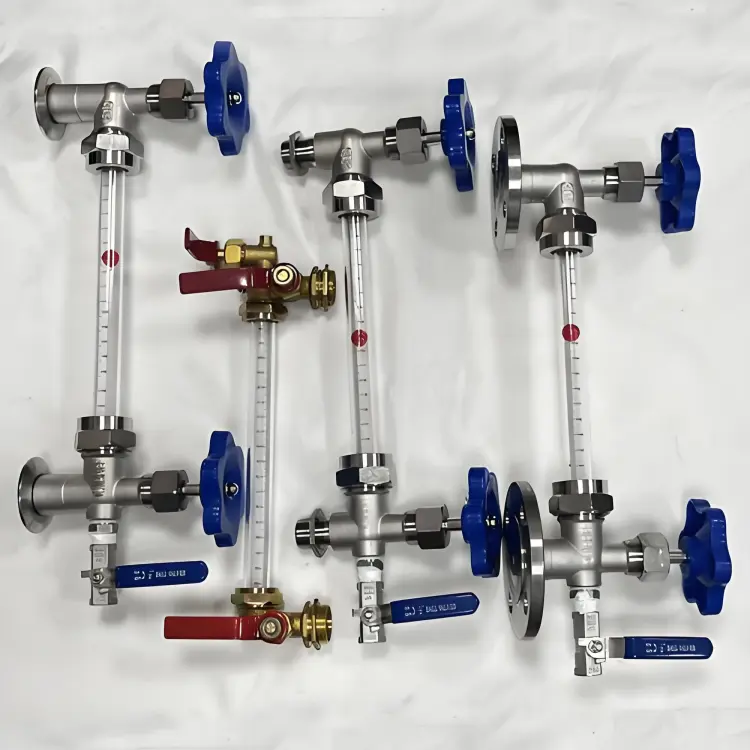
This memo is for rotating-equipment engineers who need “zero leakage.” It’s also called a tubular sight glass, inline sight tube, or pipe sight glass.
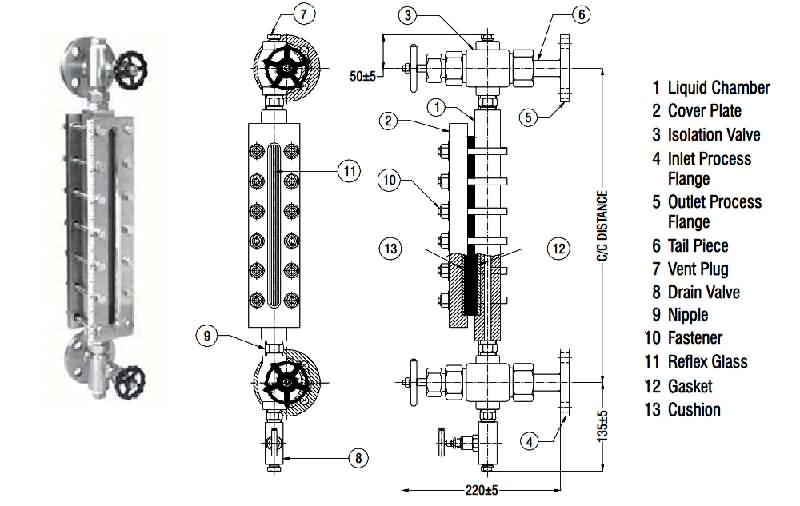
Any of the four parts of the sight glass assembly can fail. This can change a visible liquid surface into a high-pressure spray.
-
Pressure pipe segment (typically Sch 40 / Sch 80)
-
Isolation valves at both ends (needle or ball valves).
-
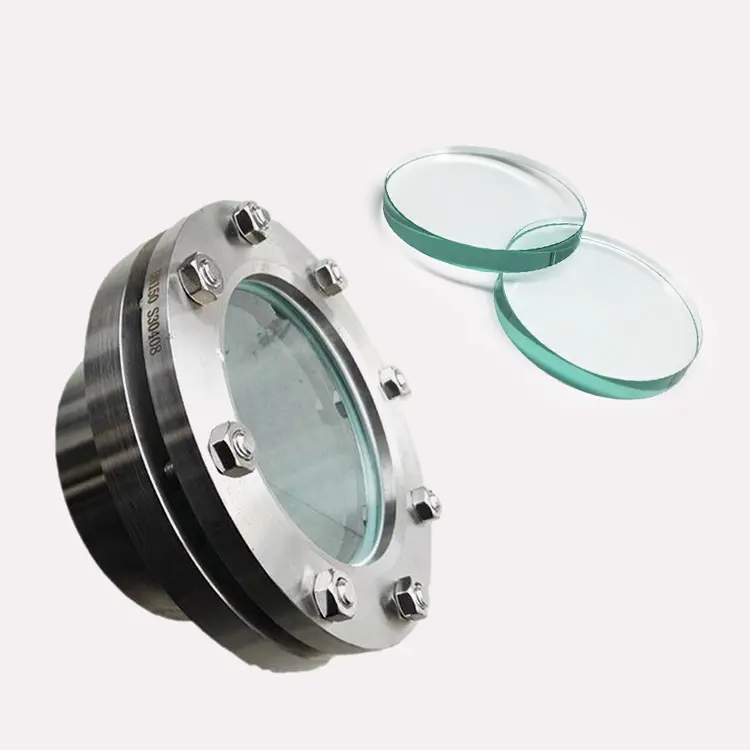
Viewing window (tempered borosilicate glass or quartz)
-
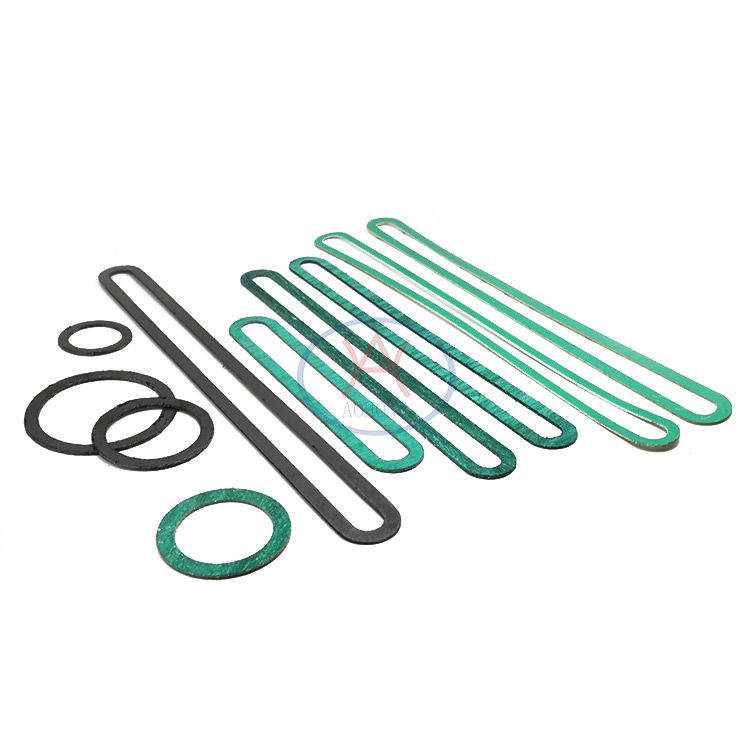
Sealing elements (PTFE, FKM O-rings, or metal-wound gaskets)
Here are field failure photos turned into checklists. You can use these in maintenance procedures.
The examples are:
-
A refinery hydrogenation unit
-
A power plant deaerator
-
A high-pressure LNG pump
1. Pre-installation — the “Three Confirmations”
Design confirmation
-
Greatest working pressure ≤ (glass-rated pressure × 0.5).
-
For ANSI Class 600 and above, prefer quartz windows (withstand pressure ~16 MPa, temperature up to 450 °C).
-
Allowable thermal shock (ΔT) is 120 °C or more. So, avoid cold water on hot glass during thermal cleaning.
Materials confirmation
-
Pipe segment material must match the main system. Hydrogen service requires ASTM A312 TP316L. In chloride environments, engineers use duplex 2205.
-
O-ring material needs to match the fluid. For example, in alkylation units with hydrofluoric acid, use PTFE over Kalrez. This reduces HF permeability to about 1×10⁻⁷ g/(m·s).
Stress confirmation
-
Sight-glass connections to equipment flanges need a sliding or loose-flange (floating) design. This helps stop thermal push-out bending.
-
Measured example: A DN25 × 600 mm sight tube with a 200 °C temperature difference can create an axial thrust of up to 8 kN. This force is strong enough to cause microcracks at the edges of the glass.
2. Installation steps & torque schedule
Step 1 — Pre-fit valves
-
Fit isolation valves first, and tighten them individually.
-
Ensure stem-to-pipe coaxiality ≤ 0.5 mm to avoid bending stresses on the glass.
Step 2 — Seat the glass
-
Glass OD tolerance h8; seat groove finish Ra ≤ 1.6 μm.
-
Press the glass in by hand. Check that it sits evenly all around 360° before you install the pressure cap.
Step 3 — Cross-pattern torque (M8 bolts)
Apply three staged torques with a dial torque wrench in sequence 1 → 3 → 2 → 4 to avoid eccentric loading:
-
10 N·m → 2. 20 N·m → 3. 30 N·m (manufacturer tolerance ±5%).
Step 4 — Hydrostatic inspection
-
Hold 1.5 × design pressure for 30 min.
-
Soap bubble test: 0 bubbles allowed.
-
Helium mass spectrometer alternative: leak rate ≤ 1×10⁻⁹ Pa·m³/s.
3. Operation — “Four Looks, One Listen” (daily/routine checks)
Look 1: Glass inner wall — vertical cracks (inspect with 60° reflected light). Look 2: O-ring extrusion or nick (monthly, side-light with torch). Look 3: Salt crust at valve-stem packing (indicates media ingress). Look 4: External pipe condensation patterns (local overcooling = internal throttling/blockage risk). When you slightly open the needle valve, listen for a hiss. This sound means there’s a pressure lock or a difference between upstream and downstream.
4. Failure cases & root causes (field examples)
Case 1 — Hydrogen circulation separator sight tube (refinery) — DN50, burst after 14 months.
-
Root cause: Thermal washwater 20 °C hit glass at 280 °C → ΔT = 260 °C > allowable thermal shock 120 °C.
-
Mitigation:
-
Close isolation valves before the thermal wash.
-
Wait for the pipe to cool to ≤ 80 °C.
-
Then, introduce cold wash water.
-
Case 2 — Power-plant deaerator sight glass — PTFE O-ring swelling and bonnet distortion
-
Root cause: Operating at 256 °C led to viscous cold flow in PTFE under pressure, causing a permanent set.
-
Mitigation: Use 15% carbon-filled PTFE. According to ASTM D695, at 200 °C for 24 hours, it shows permanent deformation of less than 3%.
Case 3 — LNG high-pressure pump outlet DN20 quartz window — pinhole leak after 3 days
-
Root cause: Bolts were over-torqued, causing edge compressive stress of about 180 MPa. Quartz can only handle a maximum compressive stress of about 110 MPa.
-
Mitigation: Re-torque to a maximum of 30 N·m as per the manufacturer’s guidelines. Also, add spring washers to help with thermal relaxation.
 5. Maintenance intervals & replacement criteria
-
High-pressure hydrogen systems:
-
Disassemble and inspect every 12 months.
-
If there’s any radial crack in the glass, discard it immediately.
-
-
Steam deaerators:
-
Replace O-rings every 18 months, even if there is no leakage.
-
Replace glass if scratches are deeper than 0.2 mm.
-
-
Cryogenic LNG service: Perform a low-temperature shock re-test every 24 months at −196 °C for 5 cycles. Continue service only if no new cracks appear.
6. Zero-Leak “Veto” Checklist (one-strike failure rules)
Before returning to service, ensure all items below pass; otherwise, reject:
-
Glass: no visible cracks, scratches, or chipped edges.
-
O-rings: no extrusion, no discoloration, or hardening.
-
Isolation valves: seat seals leak-tight at full open; stem packing shows 0 bubbles.
-
Hydrotest: 1.5 × Pd, 30 min, zero pressure drop.
-
Hot-state torque recheck: bolt relaxation ≤ 10%.
7. Key takeaways & implementation note
About 80% of sight-glass failures happen for two main reasons: over-torquing during installation and thermal shock from cleaning. Use staged torque values, cold/hot isolation procedures, and floating interfaces. This way, you can extend service from a “13-month burst” to 5 years without disassembly.
Installation and Maintenance Checklist
-
Add this checklist to your turnaround procedures.
-
Avoid embarrassing “it looked fine, and then it sprayed” incidents.