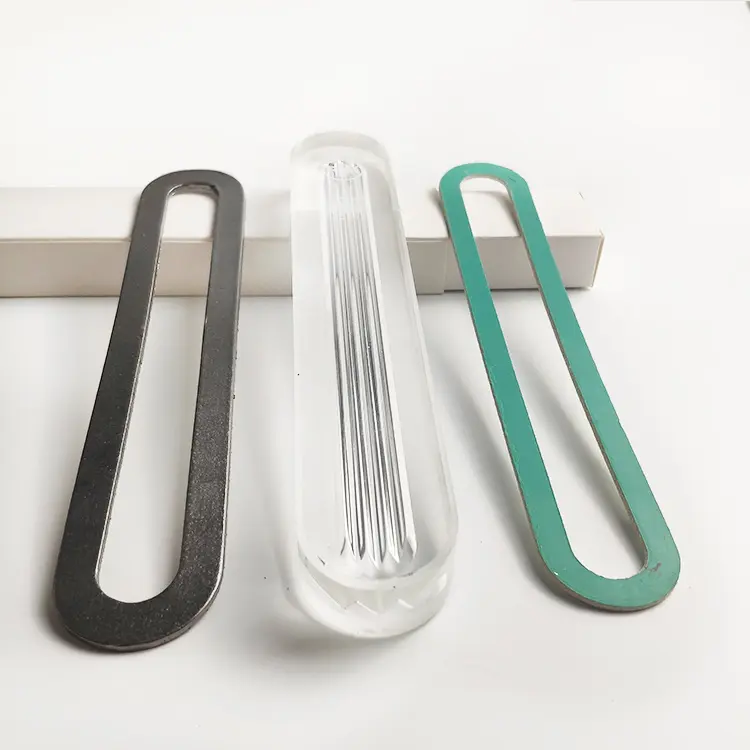
Reflex Level Gauge
The reflection type Liquid Level Gauge uses light refraction to work. It uses the different refractive indices of light in liquids and vapors. The pressure gauge has a vertical cavity filled with fluid from a storage tank. The liquid level in the chamber is the same as in the tank. This level is set by the interface line between the liquid and vapor in the chamber. The chamber installs the prism chamber or prism glass window. When light goes through the prism and there’s liquid behind it, the light enters the gauge. It does this without reflecting back to the observer. Thus, the area of the gauge appears dark or black. When light hits the area behind the lens with water vapor (above the liquid), it reflects back to the observer. This makes it look silver or white. The big difference in light transmission and reflection clearly shows the liquid level. You can add a dial to the meter if needed. It can also serve as a simple indicator of liquid level.
Each end of the pressure gauge chamber has a valve. It connects directly to the storage tank or pressure vessel. If a pressure gauge needs repair for maintenance or a leak occurs, you can isolate the valve.
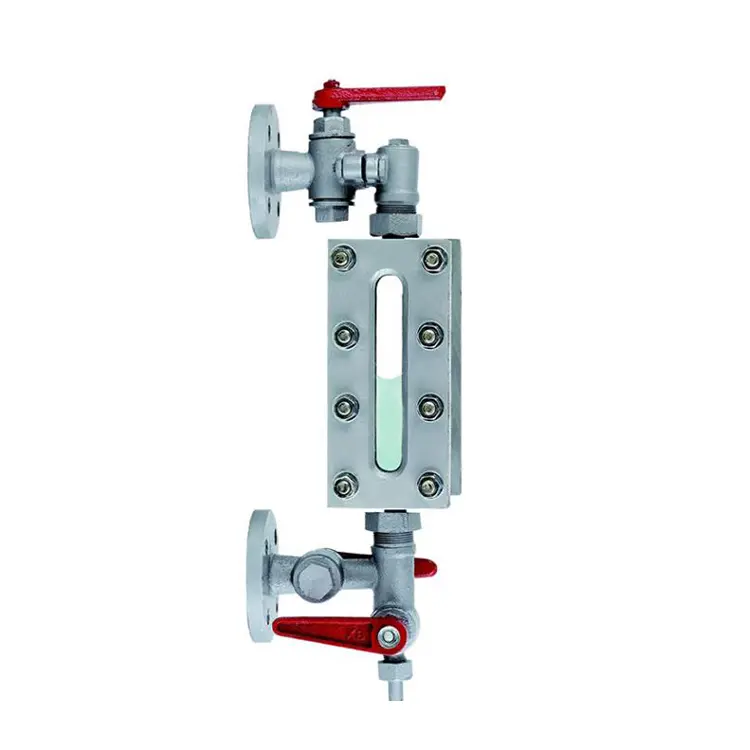
Reflex Level Gauges are cost-effective. They have lower initial and operating costs. Plus, they make it easy to check the level in a tank or container. The high contrast is perfect for transparent liquids that are hard to see.
Transparent level gauge
Transparent level gauges are like reflective level gauges. They use two glass pieces on opposite sides of the chamber. This lets light pass directly through. In a transparent level gauge, the glass is non-prismatic. These level gauges let you see the liquid’s level and its properties right away. A transparent level gauge helps you see the interface between two liquids. The liquid level shows up because the liquid and vapor in the gauge chamber aren’t equally clear.
Two-color level gauge
Two-color level gauges are often used for measuring boiler water levels. They are also used in steam generator applications. The device has light emitters, like LEDs, and uses red and green filters. It sends light through water or steam to the instrument room. This light reaches the instrument glass and the observer. Different colors of light have unique refractive indices. This means they bend differently when they pass through various materials. Each color has its own frequency and wavelength, affecting how it moves. When the meter room is full of steam, the green light will deviate significantly. As a result, the observer will see the red light on the meter glass. In the same way, the red light will turn away from the observer and the green light will pass if there is water in the gauge. So, because of the color change linked to the refractive index change, we can tell the water level in the boiler. Green represents liquid water, and red represents steam or vapor.
The two-color level gauge may consist of a long glass or a series of portholes with exposed glass.