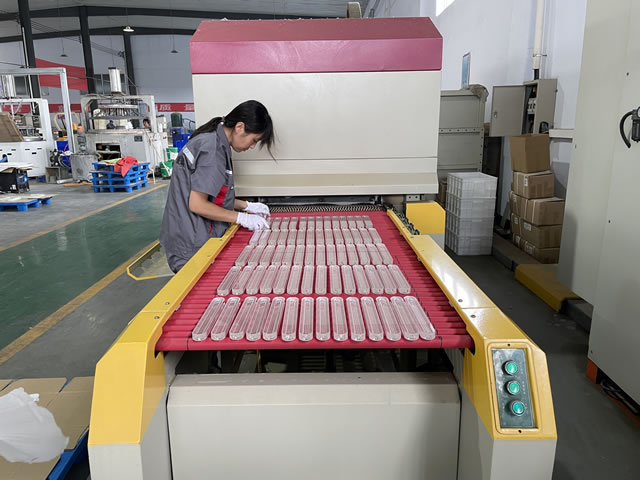
Definition and Scope of Optical Glass
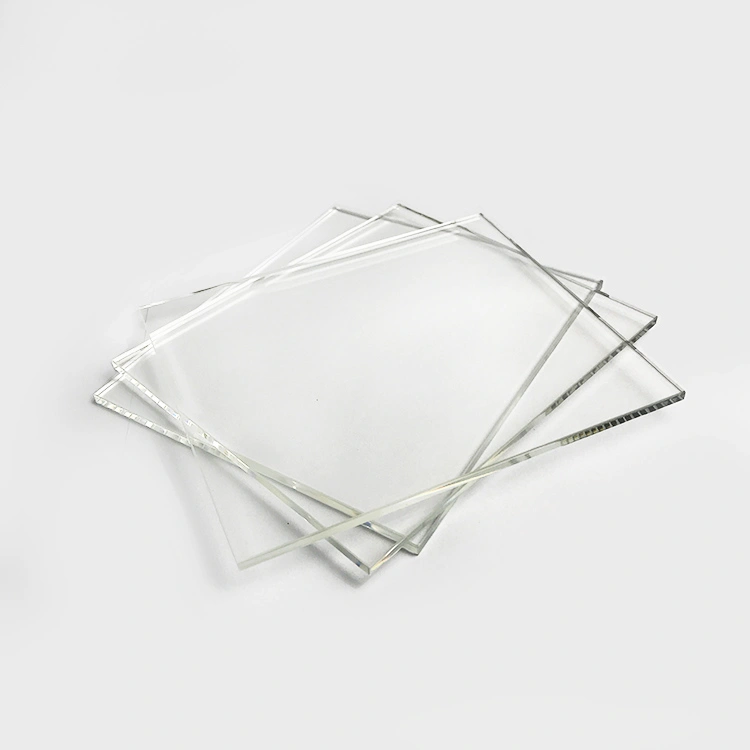 As a fused silica glass supplier, I share it with you. Optical glass refers to glass materials that redirect light and modify the spectrum of ultraviolet (UV), visible, or infrared (IR) light.
Optical glass is usually understood as colorless glass, but the definition is broader. It also includes colored glass, laser glass, quartz glass, and anti-radiation glass. In addition, ultraviolet glass, infrared glass, fiber optic glass, acousto-optic glass, and magneto-optical glass are all classified as optical glass.
Manufacturers use optical glass to produce lenses, prisms, mirrors, and optical windows. These components are essential elements in a wide range of optical instruments.
Raw Materials and Batch Formulation of Optical Glass
The raw materials used in optical glass production include oxides, hydroxides, nitrates, and carbonates. Depending on performance requirements, phosphates or fluorides may also be added to the formulation.
Colored impurities must be strictly controlled to maintain high transparency. Typical impurities include iron, chromium, copper, manganese, cobalt, and nickel. All raw materials must be precisely weighed and uniformly mixed before melting.
The main production processes include smelting, forming, annealing, and inspection.
Smelting Methods for Optical Glass
There are two primary smelting methods used in optical glass production:
-
Single crucible batch smelting
-
Continuous smelting in tank kilns
Single crucible smelting is further divided into:
-
Clay crucible smelting
-
Platinum crucible smelting
Regardless of the smelting method, mechanical stirring is required. Both stirring intensity and temperature must be strictly controlled to ensure glass homogeneity.
Characteristics of Clay and Platinum Crucible Smelting
Molten glass produced by crucible smelting is highly uniform. Clay crucibles are suitable for melting most crown glass and flint glass and offer good cost efficiency. This method is also used when the melting temperature exceeds the tolerance of platinum crucibles.
Platinum crucibles are used to smelt high-quality optical glass that would severely corrode clay crucibles. Typical examples include heavy crown glass, heavy barium flint glass, rare-earth glass, and fluorophosphorus glass.
Platinum crucibles are electrically heated, commonly using silicon–carbon or silicon–molybdenum heating rods in electric furnaces. High-frequency heating is applied to glasses prone to crystallization, requiring rapid cooling and controlled atmospheric conditions.
Development of Continuous Tank Smelting Technology
Since the 1960s, continuous platinum tank smelting has been widely adopted in many countries. This technology significantly improved both production efficiency and optical quality. Today, it represents the primary development direction of optical glass manufacturing technology.
Forming Methods of Optical Glass Blanks
Optical glass can be shaped using three traditional methods:
-
The classic crucible method
-
The rolling method
-
The pouring method
In recent years, leakage molding has gained popularity. This technique uses either a single crucible or continuous melt flow to directly draw rods or drop molten material. Pressing or leaking processes enable the formation of large-size blanks, improve material utilization, and increase overall yield.
Annealing Process for Optical Glass
A strict annealing process is essential for optical glass production. Proper annealing reduces internal stress and improves optical uniformity. Precision annealing must be carefully executed to ensure stable optical performance.
Inspection and Quality Control of Optical Glass
Optical glass inspection focuses on the following parameters:
-
Optical constants
-
Optical uniformity
-
Stress birefringence
-
Streaks
-
Bubbles
These indicators ensure that the glass meets the requirements for high-precision optical applications.
Availability of Optical Glass Blanks
Our company also supplies optical glass blanks. Please feel free to contact us for further information.