

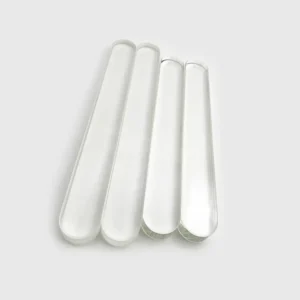
1. Materials
Our transparent flat gauge glasses are manufactured from two premium glass types:
-
Borosilicate glass — excellent thermal and chemical resistance; durable under high temperature and corrosive conditions. (Typical composition: ≥5% boric oxide.)
-
Aluminosilicate glass — high hardness and scratch resistance; better resistance to mechanical impact and abrasion.
Both materials provide superior optical clarity, enabling clear and reliable visual monitoring of liquid levels under varied lighting and media.
2. Key Features
-
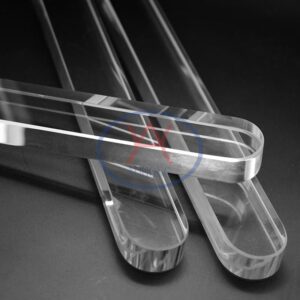
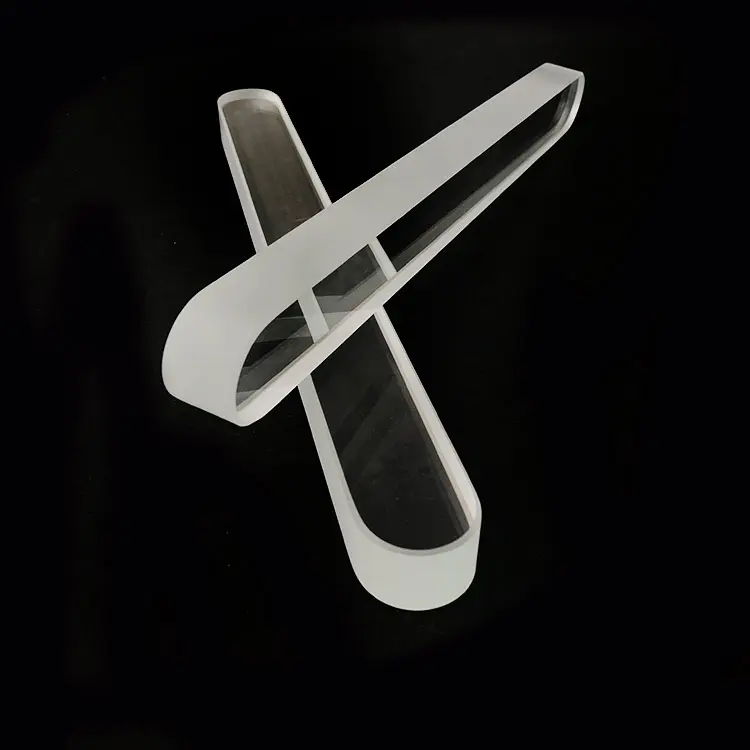
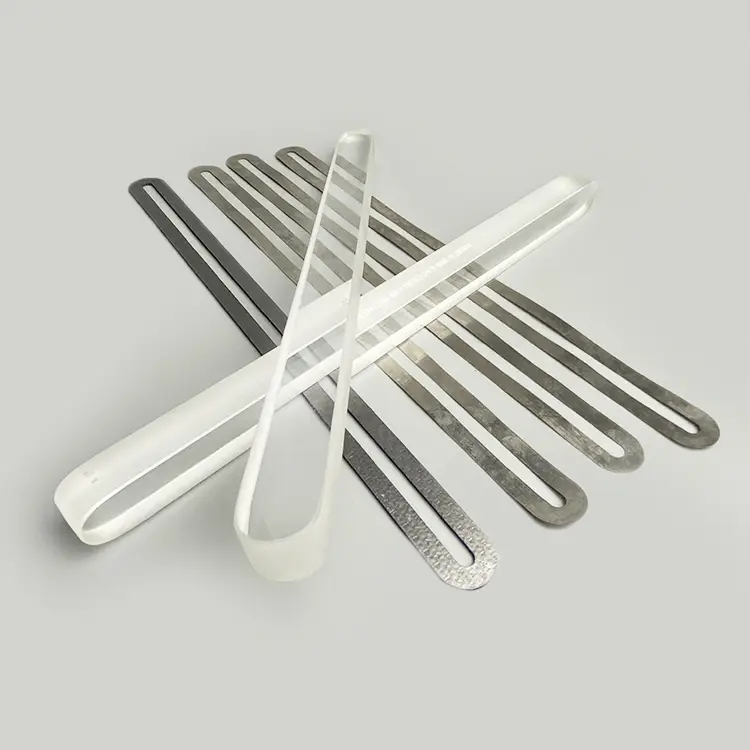
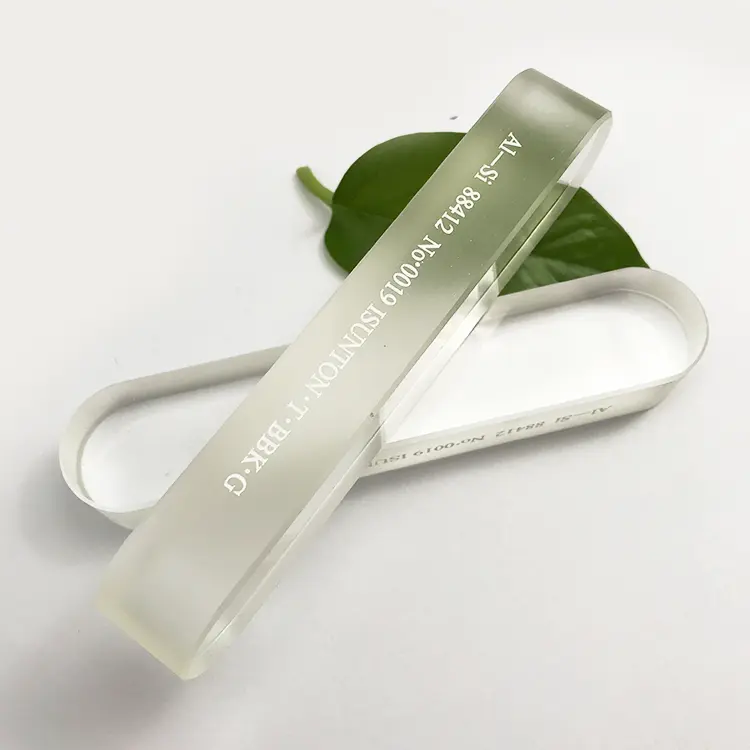
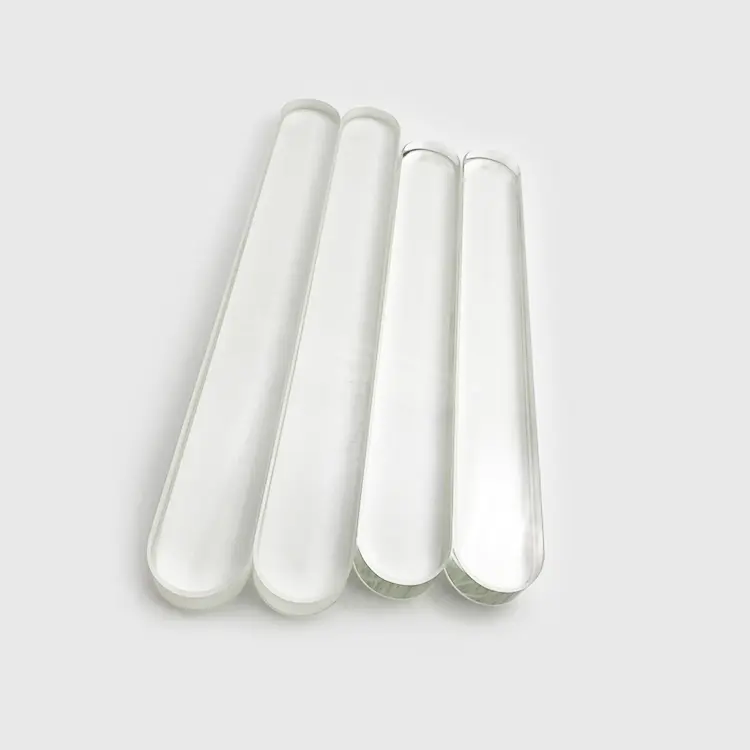
Strip (flat) profile — optimized for sight gauges, boilers and equipment where a clear, linear view of liquid level is required.
-
Double-sided polish — smooth faces on both sides for unobstructed visibility.
-
High durability — material choices and surface finishing give long service life in industrial environments.
-
Wide applicability — suitable for high temperature, corrosive media, abrasive or impact-prone environments (material dependent).
3. Surface Treatment
-
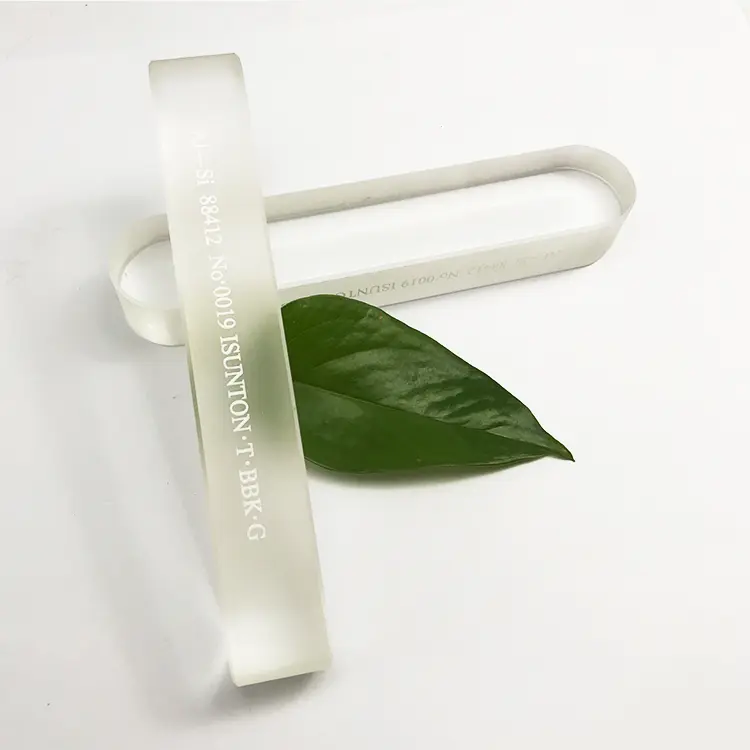
For optimal transparency and safety we grind and polish both faces and the side edges.
-
Typical process (sheet-based): start from a high-borosilicate sheet (17 mm nominal thickness), cut to size, then precision-polish faces and sides to remove burrs and prevent handling injuries.
-
Surface treatment ensures consistent optical quality and safer installation.
4. Manufacturing Processes
We employ two primary manufacturing techniques:
A. Mold-Based Manufacturing
-
Semi-finished parts are formed in molds (similar to transparent flat gauge glasses processes).
-
After forming, both faces are ground and polished to improve clarity.
-
Advantage: simpler production flow.
-
Limitation: optical clarity may be lower than sheet-based method.
B. Sheet-Based Manufacturing (Premium)
-
Begin with a 17 mm high-borosilicate sheet, cut to exact dimensions, then grind and polish faces and side edges.
-
Produces superior transparency and visual clarity — preferred where viewing clarity is critical.
-
Higher material and processing cost compared to mold-based technique.
All production follows strict quality standards to meet industrial performance expectations.
5. Applications
Typical application areas include, but are not limited to:
-
Industry pipe sight windows — monitor flow and liquid levels in process piping.
-
High-temperature / chemical environments — laboratory equipment, chemical processing units, industrial boilers (borosilicate recommended).
-
High-impact / abrasive environments — heavy machinery, oil & gas equipment (aluminosilicate recommended).
-
General industrial monitoring — any installation requiring clear, durable sight glass.
6. Technical Specifications
6.1 Borosilicate Transparent Flat Gauge Glass (extra-hard)
-
Material: Extra-hard borosilicate glass (≥5% boric oxide).
-
Transmissivity (visible light): > 90%
-
Thermal shock resistance (approx.): ≥ 160 °C
-
Softening temperature: ≈ 820 °C
-
Bending strength: ≈ 69 MPa
-
Working temperature: up to ≈ 450 °C (depends on formulation)
-
Working pressure: depends on thickness and geometry; suitable for high-pressure applications (commonly can withstand tens of bars; verify per application).
6.2 Aluminosilicate Transparent Flat Gauge Glass
-
Material: Aluminosilicate glass (high hardness).
-
Form: strip (flat).
-
Transmissivity: ~91.8%
-
Shock temperature: ≤ 370 °C
-
Softening temperature: ≥ 920 °C
-
Bending strength: 180–220 MPa
-
Working temperature: up to 600 °C
-
Working pressure: up to 200 MPa (application dependent)
Technical notes
-
Non-standard aluminosilicate thicknesses and sizes can be custom manufactured on request.
-
All performance figures are typical values — confirm specific ratings for critical applications.
7. Standard Sizes (typical examples, all dimensions in mm)
All sizes are customizable to client requirements.
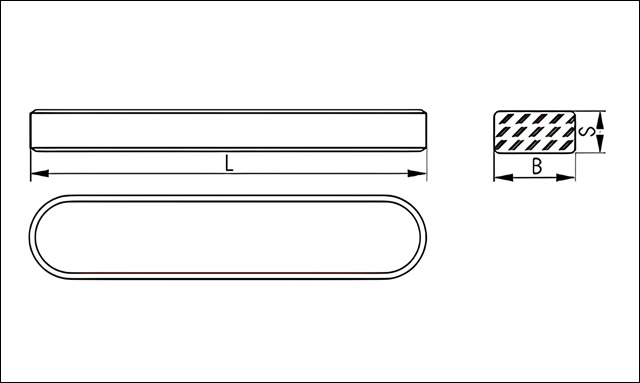
Type A (standard example)
| Type | Length (mm) | Width (mm) | Thickness (mm) |
|---|---|---|---|
| A0 | 95 | 30 | 17 |
| A1 | 115 | 30 | 17 |
| A2 | 140 | 30 | 17 |
| A3 | 165 | 30 | 17 |
| A4 | 190 | 30 | 17 |
| A5 | 220 | 30 | 17 |
| A6 | 250 | 30 | 17 |
| A7 | 280 | 30 | 17 |
| A8 | 320 | 30 | 17 |
| A9 | 340 | 30 | 17 |
Type B (wider example)
| Type | Length (mm) | Width (mm) | Thickness (mm) |
|---|---|---|---|
| B0 | 95 | 34 | 17 |
| B1 | 115 | 34 | 17 |
| B2 | 140 | 34 | 17 |
| B3 | 165 | 34 | 17 |
| B4 | 190 | 34 | 17 |
| B5 | 220 | 34 | 17 |
| B6 | 250 | 34 | 17 |
| B7 | 280 | 34 | 17 |
| B8 | 300 | 34 | 17 |
| B9 | 320 | 34 | 17 |
| B10 | 340 | 34 | 17 |
| B11 | 370 | 34 | 17 |
| B12 | 400 | 34 | 17 |
| B13 | 420 | 34 | 17 |
8. Advantages / Competitive Points
-
Clear visibility — double-sided polishing and high transmittance ensure precise readings.
-
Environmental resistance — aluminosilicate variants maintain clarity and hardness in aggressive / abrasive conditions.
-
Wide service range — available options to suit low-to-high pressure and low-to-high temperature operations (depending on material and thickness).
-
Customizable — sizes and thicknesses can be tailored to customer specifications.
9. Ordering & Customization Notes
-
Provide intended operating temperature, pressure, media type, and required dimensions when requesting a quotation.
-
For safety-critical or high-pressure applications, request material certificates and mechanical/pressure test reports.
-
Lead time and cost vary with material choice (sheet-based aluminosilicate parts typically cost more due to material and processing).